Open today from 10 AM – 5 PM


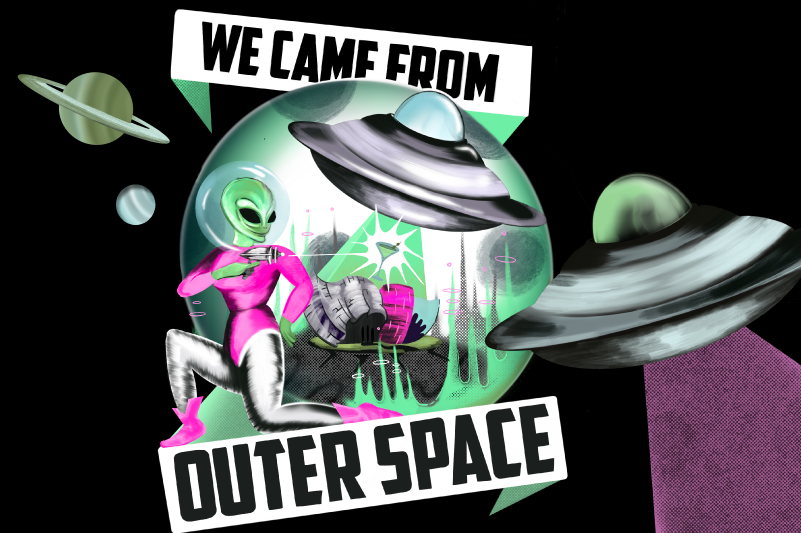
Fashionably Undead is MOPOP’s annual Halloween party for horror fans who like their scares with a side of camp.
This year, the aliens have landed. Inspired by 1950s and ’60s alien-invasion films and retro-futurist sci-fi, the bash blurs the line between horror and science fiction with a gallery-wide alien scavenger hunt, UFO photo ops, movie trivia, and a costume contest with a $500 grand prize.
Get ready for first contact.
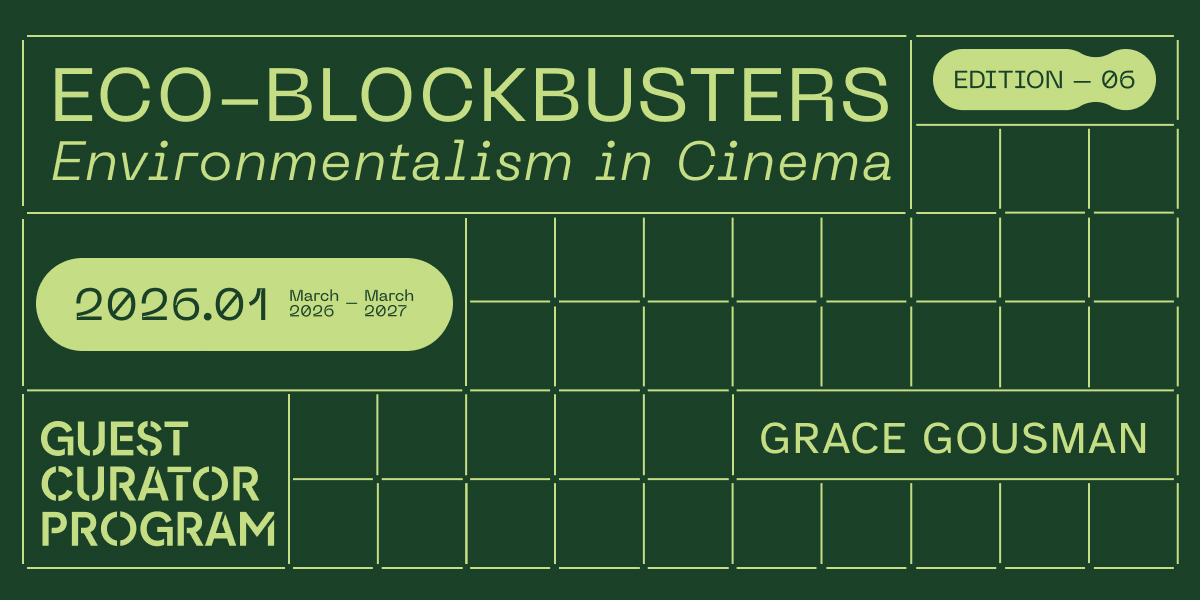
What first drew you to apply for MOPOP’s Guest Curator Program, and what did you hope to explore through it?
When I applied for MOPOP’s Guest Curator Program, I was in my second year of the Museology graduate program at the University of Washington. Throughout my studies, I fell in love with exhibition design and wanted to find every opportunity to learn from people in the field and gain experience.
When I learned about this program through MOPOP, I knew I had to apply. I had visited a handful of times and truly loved the museum, so I really wanted a chance to get my name in there and make an exhibition I could be proud to show. I knew it would be an amazing experience, a great way to meet others in my field, and an opportunity to tell a story that I’m not only passionate about, but that is super important as well.
Did your perspective on museum storytelling change after going through this process?
I think my perspective expanded rather than changed. This was my first time working with fictional stories as the basis of an exhibition. Though these stories all reflect elements of our reality, they are otherworldly. Placing these other worlds together, and then connecting them to our own to tell one cohesive narrative, was something entirely new. I think the process broadened my understanding of storytelling and expanded the ways in which I can include diverse stories to form a larger narrative.
Talk to us about the inspiration behind Eco-Blockbusters: Environmentalism in Cinema.
Godzilla. Let me explain...
When I first decided to apply for the Guest Curator position, I had a few ideas. However, no idea was more prominent in my mind than Godzilla. For whatever reason, during my second year of grad school at UW, I was consumed by the character. I would wake up and watch Godzilla while getting ready. I’d watch it while eating, doing homework, and working out. I would talk about Godzilla to my cohort, exclaiming that he is “for the girlies” and an "environmental queen.”
That’s where it all started. I began thinking about other movies that carried environmental messaging, movies that reflect our own relationships with the Earth. As soon as you look at movies through a lens of environmentalism, you start seeing how so many plots are driven by humans and their interactions with nature.

Blockbusters are designed to entertain on a massive scale. What does it mean to use spectacle as a lens for something as urgent and complex as environmental collapse?
We learn a lot from the media we consume. We form opinions, create connections, and develop new perspectives as we learn, so this form of media, which is designed to be consumed on a massive scale, holds a lot of power. When it comes to a subject like the environment, blockbusters have the opportunity to make conversations about ecological collapse more accessible and understandable. I’m not a scientist, and neither are many of us, so sometimes technical jargon and scientific terms can get in the way of seeing and understanding the issues. Blockbusters, and other forms of pop culture, present these concepts in a way where we not only understand the issues, but also see the consequences of leaving them unchecked.
Many eco-blockbusters center on human hubris. What do these stories reveal about our relationship to power, progress, and the natural world?
The metaphor of flying too close to the sun is quite familiar to most of us. I think these movies all show us a similar story: as power corrupts and turns dangerous, progress begins to be at the expense of people rather than for people, and we harm and manipulate our natural world to increase profit. The reckless pursuit of anything without acknowledging and considering limitations and consequences ultimately harms each and every one of us.
In Eco-Blockbusters, environmental crises appears as both villain and consequence. How did you navigate that duality while shaping the narrative of the exhibition?
I think it’s easy to frame consequences as the “villains” of our stories. We would rather not be the reason for our own suffering, but environmental crises are, in essence, both. They become the “villains” by way of consequence. I think Jurassic Park is a prime example of this idea. You can say the T-Rex and Velociraptors are the bad guys, but they are simply the consequence of greed, consumerism, and unrestricted scientific advancement; which are arguably the true villains of the story.
We see this translated into our everyday lives as well. Large AI data centers are creating many environmental issues. They are actively impacting local communities through higher electricity bills, decreasing access to potable water, and even increasing rates of asthma and respiratory issues due to air pollution. These are all consequences, but we are the villains. We’ve created the monster, but we can also stop it.
Can you give us a sneak peek at some of your favorite artifacts in the exhibition?
Let’s just say: “May the odds be ever in your favor.”
What conversations do you hope this exhibition sparks beyond the gallery walls?
Foremost, I hope this exhibition leads to action. We are all facing real-world environmental threats, from deforestation and pollution to poaching and big-game hunting to climate change and so much more. If we do nothing to mitigate these threats, then we might not have any more stories to tell in the future. I hope my exhibition continues to expand the conversations we have around environmental justice and protection, as well as how cinema can aid in these complex discussions.
I also hope EcoBlockbusters: Environmentalism in Cinema inspires people to consume less and reuse more, advocate for others and our planet, and stay informed! We can all do something to better the world around us, and I think learning about what’s happening, whether in a classroom or through pop culture, is the first step toward the conversations we need to have about environmentalism.
Get tickets to Opening Day on March 18 and be among the first to experience Eco-Blockbusters: Environmentalism in Cinema at MOPOP.