Open today from 10 AM – 5 PM


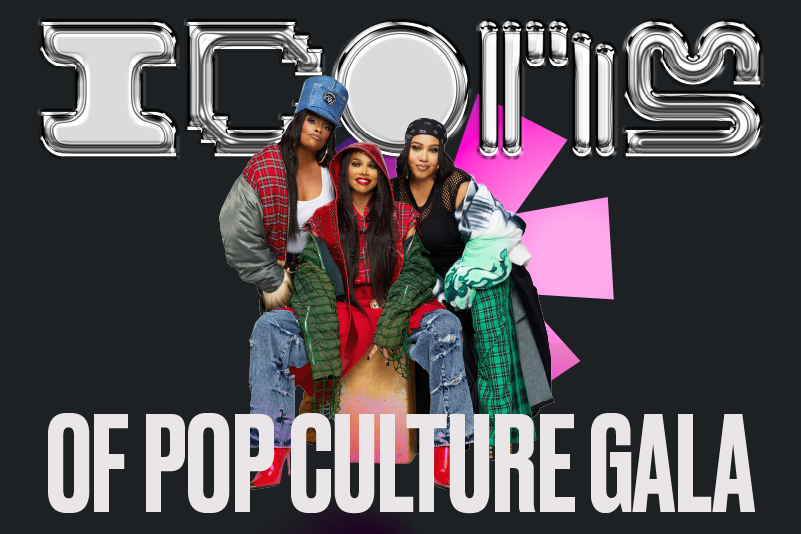
Salt-N-Pepa changed the trajectory of hip-hop. Their sharp lyricism, undeniable chemistry, and boundary-pushing style helped redefine who could take center stage. Now, they’re taking over Sky Church.
Get Your Tickets
From Seattle clubs to arenas around the world, Alice in Chains demonstrated that the city’s underground could produce music of lasting power, influencing generations of hard rock and metal artists while continuing to write new chapters in its own story.
Formed in 1987 by Jerry Cantrell, Layne Staley (1967-2002), Sean Kinney, and Mike Starr (1966-2011), Alice in Chains emerged from Seattle’s underground before evolving through later lineups that included bassist Mike Inez and vocalist William DuVall. Their music paired crushing guitar riffs with the unmistakable vocal harmonies of Cantrell and Staley, while albums including Facelift (1990), Dirt (1992), and Jar of Flies (1994) expanded grunge’s emotional and musical range. From Seattle clubs to global stages, Alice in Chains has remained one of the defining voices of heavy rock, continuing to evolve while carrying its legacy into the twenty-first century.
Long before women routinely led recording studios and record labels, Bonnie Guitar helped build the Pacific Northwest music industry from the inside out.
Born Bonnie Buckingham in Seattle, Bonnie Guitar (1923-2019) found national success as a singer, songwriter, and guitarist, scoring a crossover hit with “Dark Moon” in 1957. Early in her career, she worked with (and later married) Seattle musical innovator Paul Tutmarc, gaining firsthand experience as a musician, recording engineer, and studio professional. As co-founder of Seattle’s Dolton Records, she helped launch the careers of Northwest artists including The Fleetwoods and The Ventures, proving that world-class popular music could be created, recorded, and released from the Pacific Northwest.
Seattle’s punk scene was more than a musical movement – it was a community that built its own venues, publications, and creative networks, laying the foundation for decades of independent music.
The scene began with Seattle’s first punk show in 1976 and grew through DIY spaces like The Bird and the Metropolis, alongside independent voices such as The Rocket and KCMU. Musicians freely crossed the boundaries between punk, art, metal, and pop, creating an environment where experimentation thrived. By the mid-1980s, that collaborative underground had fostered bands including Green River, Soundgarden, and many others, laying the groundwork for Seattle’s next musical revolution.
Powered by the soaring vocals of Ann Wilson and the masterful guitar playing of Nancy Wilson, Heart became one of the defining rock bands of the 1970s and beyond.
Formed in Vancouver, B.C., in 1973 by Seattle musicians, Heart found its signature sound around sisters Ann and Nancy Wilson. Their breakthrough album Dreamboat Annie (1975) launched a career that blended hard rock, heavy metal, folk, and pop into enduring hits including “Magic Man,” “Crazy on You,” “Barracuda,” ‘What About Love,” and “These Dreams.”
The Wilson sisters remain deeply connected to Seattle, where their Bad Animals recording studio became a creative hub for many artists, including bands from the city’s 1990s grunge scene. Selling more than 50 million records worldwide, Heart broke barriers for women in rock, demonstrating that technical mastery, commercial success, and uncompromising artistic vision could thrive on the biggest stages.
From the 1920s through the 1960s, Seattle’s Jackson Street was a thriving jazz community, where musicians, artists, and audiences came together to create a lasting cultural legacy.
Stretching through the Central District and Chinatown-International District, Jackson Street’s clubs, dance halls, and after-hours venues hosted a vibrant scene of blues, swing, and bebop. Pioneering musicians like Oscar Holden helped establish the neighborhood’s musical foundation, while photographer Al Smith captured its energy and personalities. As a teenager, Ray Charles spent formative years performing in Seattle clubs, gaining experience that contributed to the development of his groundbreaking sound. The scene also nurtured future legends including Quincy Jones and Ernestine Anderson, whose experiences in the city shaped their remarkable careers.
Though redevelopment and changing cultural landscapes transformed Jackson Street, its legacy endures through the artists, images, and sounds that emerged from this extraordinary community.
Photographer Jini Dellaccio gave the Pacific Northwest’s emerging rock scene a visual identity as distinctive as its sound.
Working in the Pacific Northwest during the 1960s, Dellaccio brought a fine artist’s eye to the region’s emerging garage and rock scenes. Rather than relying on studio backdrops, she photographed musicians in forests, fields, and beaches, using the Northwest landscape to create dramatic, cinematic portraits. Her images of The Sonics, The Wailers, Paul Revere & the Raiders, and other artists helped define the visual identity of a generation of musicians.
Working in a field dominated by men, Dellaccio earned the trust of artists through her collaborative approach, producing album covers and promotional images that challenged convention. Her photographs remain among the most iconic visual documents of the Pacific Northwest’s early rock scene.
No other song traces the Pacific Northwest’s imprint on popular music as clearly, or as chaotically, as “Louie Louie.”
Written in 1955 by Richard Berry (1935-1997) as a Caribbean-influenced rhythm and blues song, “Louie Louie” took on a new identity as it moved north through the Northwest dance circuit. Pacific Northwest bands transformed it into something louder, faster, and more primal, with groups including The Dave Lewis Combo, The Blue Notes, and Rockin’ Robin Roberts (1940-1967) with The Wailers reshaping the song around its essential chords and relentless rhythm. Each version altered the lyrics, tempo, and attitude until “Louie Louie” became less a composition than a communal blueprint for rock ‘n’ roll rebellion.
That spirit reached its most famous expression in The Kingsmen’s 1963 recording, captured in a single take with a cracked microphone, missed cues, and famously unintelligible vocals. The ensuing controversy over the song’s supposed obscenity – including an FBI investigation – only amplified its legend. “Louie Louie” proves that three chords, raw energy, and a willingness to make noise can change music forever.
Merrilee Rush rose out of Seattle’s dynamic 1960s music scene and with her soulful 1968 hit, “Angel of the Morning,” became a defining voice in pop music.
Born in Seattle, Merrilee Rush began performing with local bands, such as Tiny Tony and the Statics, before forming Merrilee Rush and the Turnabouts, a fixture of the Pacific Northwest teen dance circuit. Her breakthrough came when producer Chips Moman invited her to record in Memphis, blending country, pop, and R&B influences into what became her signature song.
Rush’s career extended through the 1970s and ‘80s. She toured widely, shared stages with rock and pop legends, and embraced a range of styles. As one of the few women from the region to achieve mainstream success during that era, Rush helped expand the role of women in music.
As Seattle’s grunge explosion waned, Modest Mouse forged a new musical path, blending jagged energy, emotional honesty, and experimentation to help define 21st-century indie rock.
By the mid-1990s, Issaquah’s Modest Mouse – founded by vocalist Isaac Brock, bassist Eric Judy, and drummer Jeremiah Green (1977-2022) – captured this shift with music that balanced jagged guitars, existential lyrics, melodic bass lines, and restless rhythms.
Their early albums, This Is a Long Drive for Someone with Nothing to Think About (1996) and The Lonesome Crowded West (1997), became landmarks of the era while helping establish Seattle’s Up Records. After signing with Epic Records, the band expanded its sound on The Moon & Antarctica (2000) before reaching a global audience with Good News for People Who Love Bad News (2004), featuring the hit “Float On.”
Neko Case blurs the boundaries between punk, indie rock, and alt-country, transforming the traditions of each into a deeply personal and influential sound.
After beginning her musical career as a drummer in Tacoma and Seattle punk bands, Case moved to Vancouver, where she became part of the city’s vibrant indie scene and developed her distinctive voice as a songwriter. Her solo albums blended the urgency of punk with the storytelling traditions of country and folk, pairing powerful vocals with vivid, poetic lyricism. As a member of The New Pornographers, she helped define the sound of contemporary indie rock, while simultaneously maintaining her own identity as an acclaimed alt-country artist. By moving fluidly between genres, Case challenges expectations of what alternative music can be, creating a body of work defined by independence, literary craft, and fearless experimentation.
Nirvana ignited a musical revolution, transforming Seattle's underground into the center of popular culture.
Formed in 1987 by Kurt Cobain (1967-1994) and Krist Novoselic, Nirvana fused punk’s urgency with melodic songwriting and emotional vulnerability. Their 1991 album Nevermind propelled grunge into the mainstream, with “Smells Like Teen Spirit” becoming a defining song of a generation. In Utero (1993) reaffirmed the band’s uncompromising artistic vision, while MTV Unplugged in New York (1994) revealed the depth of Cobain’s songwriting and singular voice. Cobain’s death in 1994 brought the band’s brief career to an abrupt end, but Nirvana’s influence continues to resonate, securing its place as one of the most transformative bands in rock history.
With a luminous voice and commanding stage presence, Pat Suzuki became one of the most celebrated Asian American performers of the 1950s and 1960s.
Born Chiyoko Suzuki in California, Suzuki discovered her love of singing as a child before her family was incarcerated during World War II at the Merced Assembly Center and Amache concentration camp. After the war, she studied art and education while performing in nightclubs. In 1955, a tour of Teahouse of the August Moon brought her to Seattle, where an impromptu performance at The Colony club launched her local career. Her voice soon drew national attention, leading to a recording contract with RCA Victor and her acclaimed role as Linda Low in Rodgers and Hammerstein’s Flower Drum Song in 1958. A Grammy nominee and Kennedy inauguration performer, Suzuki continues to champion Asian American representation through music, theater, and activism.
Decades before the electric bass transformed popular music, Seattle inventor Paul Tutmarc built the instrument that started it all.
A musician, teacher, and inventor, Paul Tutmarc (1896-1972) spent the 1930s experimenting with musical amplification using radio and telephone technology. Through his Seattle company Audiovox, he developed some of the earliest solid-body electric guitars and amplifiers before introducing the Model 736 Bass Fiddle in 1936 – the world’s first fretted, solid-body electric bass. Although Audiovox never achieved the commercial success of Gibson, Rickenbacker, or Fender, Tutmarc’s innovations laid the technological foundation for rock ‘n’ roll and generations of amplified music.
Pearl Jam carried Seattle’s underground spirit into the arena, building one of rock’s most enduring relationships between a band and its audience.
Formed in 1990 from the ashes of Mother Love Bone, Pearl Jam brought together Stone Gossard, Jeff Ament, Mike McCready, and Eddie Vedder. As the band evolved through several drummers—including longtime member Matt Cameron—it paired a powerful rock sound with deeply personal storytelling on albums beginning with Ten (1991), producing enduring songs such as “Alive,” “Jeremy,” and “Even Flow.” Throughout decades of touring and across a dozen album, Pearl Jam has prioritized artistic independence, live performance, and community, growing beyond the grunge era to become one of the defining American rock bands of the modern era.
While Seattle became synonymous with grunge, Queensrÿche revealed that the Pacific Northwest was also home to metal music that was complex, ambitious, and progressive.
Formed in Bellevue in 1980, Queensrÿche combined technical precision, operatic vocals, and intricate storytelling to create a sound that pushed beyond traditional heavy metal. Their landmark album Operation: Mindcrime (1988) transformed the concept album into a cinematic experience, weaving together political themes, social commentary, and a compelling narrative.
The band reached its commercial peak with Empire (1990), which brought Queensrÿche international recognition and produced the Grammy-nominated ballad “Silent Lucidity.” Through their success, Queensrÿche expanded perceptions of Seattle’s music scene, demonstrating that the region’s creativity extended beyond grunge into progressive metal and other ambitious forms of rock.
Setting Sun Circle: Sky of Light and Sound
The music of the Coast Salish peoples are considered the original rhythmic sounds of the Pacific Northwest landscape. Long before Seattle became an established city, the lands and waters of this region were home to Coast Salish peoples whose songs carried history, teachings, language, and relationships across the generations and landscapes. Music is woven into Coast Salish communal lifeways being an instrumental part of ceremonies, gatherings, spirituality and celebrations of life.
Coast Salish songs hold intention to honor ancestors, express gratitude, and strengthen connections to waterways, all living beings and Mother Earth. Music is a living archive that preserves knowledge and celebrates Indigenous identity for future generations.
Including Coast Salish music in an exhibit about Seattle’s musical history acknowledges how the story of local music did not begin with colonization or pop music culture, but with Indigenous peoples whose musical traditions continue to shape and honor the cultural landscape. The Lummi people are a Coast Salish group whose ancestral homelands encompass the lands and waters of the northern Puget Sound. For thousands of years, they have maintained a relationship with the Salish Sea, relying on fishing and stewardship of their lands and natural resources. Today, they are a thriving nation that strives to uphold treaty rights, culture and language revitalization.
Setting Sun Circle, an Indigenous-led nonprofit based in Bellingham, Washington located on the ancestral lands of the Lummi people, was invited by MOPOP to present the original sounds of the region. Setting Sun Circle opens a cultural space in 2027.
Sir Mix-A-Lot brought Seattle’s emerging hip-hop culture to a national audience, proving that the Northwest could create its own distinct voice.
Growing up in Seattle, Sir Mix-A-Lot developed a style that combined humor, deep bass, regional pride, and sharp social observation. His breakthrough came with “Posse on Broadway” (1988), a celebration of Seattle that became one of the first nationally recognized rap songs rooted in the Pacific Northwest. He followed it with the Grammy-winning “Baby Got Back” from Mack Daddy (1992), a cultural phenomenon that challenged mainstream ideas of beauty and representation. Beyond his success as a performer, Mix co-founded Nastymix Records with DJ Nasty Nes, helping launch a generation of Northwest hip-hop artists while proving Seattle’s voice belonged on the national stage.
From Olympia’s DIY underground, Sleater-Kinney transformed the radical energy of Riot Grrrl into one of the most influential voices in alternative rock.
In the early 1990s, the Pacific Northwest became a center for Riot Grrrl, a movement that challenged punk’s male-dominated culture through feminist politics, independent publishing, and community-driven music. Artists including Bikini Kill, Bratmobile, and Heavens to Betsy created spaces where women’s voices and experiences moved to the forefront. From this environment, Corin Tucker and Carrie Brownstein formed Sleater-Kinney in 1994, bringing the movement’s urgency into a sharper, more expansive musical vision.
With Janet Weiss joining in 1997, the band reached new levels of intensity and musicianship. Albums such as Dig Me Out (1997) demonstrated how Riot Grrrl’s DIY spirit could evolve into a lasting force in alternative rock.
Soundgarden expanded the boundaries of Seattle’s emerging grunge sound, merging the intensity of punk with the weight and complexity of heavy metal.
Formed in 1984 by singer/drummer Chris Cornell (1964-2017), guitarist Kim Thayil, and bassist Hiro Yamamoto, Soundgarden evolved into its best-known lineup when drummer Matt Cameron joined in 1986 and bassist Ben Shepherd replaced Yamamoto in 1990. They combined crushing riffs, unconventional rhythms, and Cornell’s soaring vocals into a sound that was both powerful and experimental. Albums such as Badmotorfinger (1991) and Superunknown (1994) brought the band international recognition while preserving the ambition and musical risk-taking that defined their early years. From Seattle’s underground clubs to the Rock & Roll Hall of Fame, Soundgarden’s career demonstrated that uncompromising creativity could achieve critical acclaim, commercial success, and global influence.
Performing live in front of an audience and recording in a studio is an integral part of the experience for many musicians. MOPOP's Stage and Studio display features instruments and gear related to Jack Endino and Reciprocal Studios, Team Dresch, 7 Year Bitch, Bikini Kill, Modest Mouse, Screaming Trees, The Presidents of the United States of America, and Metal Church.
Emerging from Seattle’s vibrant hip-hop scene, Stas THEE Boss has become one of the region’s most innovative and influential artists and tastemakers.
As one half of the Sub Pop–signed duo THEESatisfaction, Stas THEE Boss helped shape a bold, futuristic sound that fused hip-hop, soul, and R&B with unapologetically political lyricism. Their 2012 debut, awE naturalE, and collaborations with Shabazz Palaces positioned Stas within the groundbreaking Black Constellation collective, a network of artists redefining Northwest music and culture.
Since THEESatisfaction disbanded in 2016, Stas has continued as a solo artist, DJ, and host on the popular local radio station KEXP, creating music that centers Black voices, queer perspectives, and community activism. Her work pushes Pacific Northwest hip-hop into new creative territory while remaining deeply imbedded in its grassroots spirit – a future as bold and boundary-pushing as its past.
More than a record label, Sub Pop transformed Seattle’s underground music scene into a global cultural phenomenon.
Founded in Seattle in 1986 by Bruce Pavitt and Jonathan Poneman, Sub Pop grew from Pavitt’s Subterranean Pop fanzine and cassette compilations, which championed emerging independent artists across North America. The label combined a DIY ethos with sharp marketing, distinctive design, and an ear for groundbreaking music. Through artists including Nirvana, Mudhoney, Soundgarden, and TAD, Sub Pop helped define grunge while introducing Seattle to audiences around the world.
Rather than fading with grunge, Sub Pop continually reinvented itself, embracing indie rock, folk, hip-hop, dream pop, and experimental music. Artists including The Shins, Iron & Wine, Fleet Foxes, Beach House, clipping., and Father John Misty reflect a label that has remained one of the most influential voices in independent music for four decades.
Few bands embodied Seattle’s fiercely independent punk spirit more completely than The Gits, whose music and legacy continue to resonate decades later.
Originally formed in 1986 at Antioch College in Ohio, The Gits – Mia Zapata (1965-1993), Andy “Joe Spleen” Kessler, bassist Matt Dresdner, and drummer Steve Moriarty – brought their ferocious punk sound to Seattle in the early 1990s. Known for electrifying live performances and unflinching songwriting, the band was defined by Zapata’s powerful, expressive voice, which combined vulnerability, fury, and emotional depth.
In 1993, Zapata’s murder devastated Seattle’s music community. In response, musicians, activists, and fans came together to form Home Alive, a collective dedicated to self-defense education and community safety. The organization transformed grief into action, reflecting the same sense of urgency and solidarity that defined The Gits’ music. Though their time together was brief, The Gits left an enduring mark on Seattle punk, inspiring generations of artists to embrace authenticity, resilience, and fearless self-expression.
The independent networks built by Seattle’s punk community became the foundation for a new generation of musicians whose sound would soon be known as grunge.
The 1986 Deep Six compilation introduced the first wave of Seattle’s emerging grunge scene, featuring Green River, Soundgarden, Skin Yard, The Melvins, U-Men, and Malfunkshun. These bands blended punk’s energy with heavy metal, garage rock, and experimental music, creating a sound that was raw, heavy, and distinctly their own.
Over the following years, bands including Mudhoney, TAD, and Screaming Trees, and Mother Love Bone expanded that sound as Seattle’s underground gained national attention. Independent labels like C/Z Records and Sub Pop helped these musicians reach wider audiences while preserving the DIY spirit that defined the scene.
As Seattle’s grunge scene emerged, Tina Bell’s commanding voice and fearless presence challenged expectations both onstage and off.
In 1983, Tina Bell (1957-2012) and her husband, guitarist Tommy Martin (1959-2019), formed Bam Bam with bassist Scott Ledgerwood and drummer Matt Cameron, later of Soundgarden and Pearl Jam. As a Black woman fronting one of Seattle’s earliest hard-edged rock bands, Bell brought commanding vocals, fearless performances, and socially charged lyrics to a scene that was overwhelmingly white. Bam Bam’s heavy riffs and punk-infused energy anticipated many of the musical qualities later associated with grunge.
Although the band never achieved mainstream success, Bell’s contributions have been increasingly recognized as foundational to Seattle’s music history. Today, she is celebrated as a pioneering artist whose influence continues to reshape the story of grunge.
Before punk, Seattle had Ze Whiz Kidz, a fearless, glitter-drenched performance troupe who fused drag, theater, and glam into an explosion of self-expression.
Formed in 1969, Ze Whiz Kidz challenged conventions with high-energy, gender-bending performances inspired by Andy Warhol’s Factory, underground cabaret, and glam rock. Their guerrilla street theater evolved into a residency at the Submarine Room beneath Smith Tower, which they transformed into the Exotic Paradise Room, staging nearly 100 wildly imaginative productions.
As their reputation grew, Ze Whiz Kidz opened for Alice Cooper and the New York Dolls, helping bridge Seattle’s counterculture and the emerging punk movement. By the mid-1970s, members including Tomata du Plenty (1948-2000) and Satin Sheets (1950-2023) helped launch influential punk bands, such as the Tupperwares and The Lewd, while others became leaders in Seattle’s LGBTQ+ and alternative arts communities, contributing to institutions such as Bumbershoot and Teatro ZinZanni. Their legacy helped establish Seattle as a city where creative reinvention could flourish.
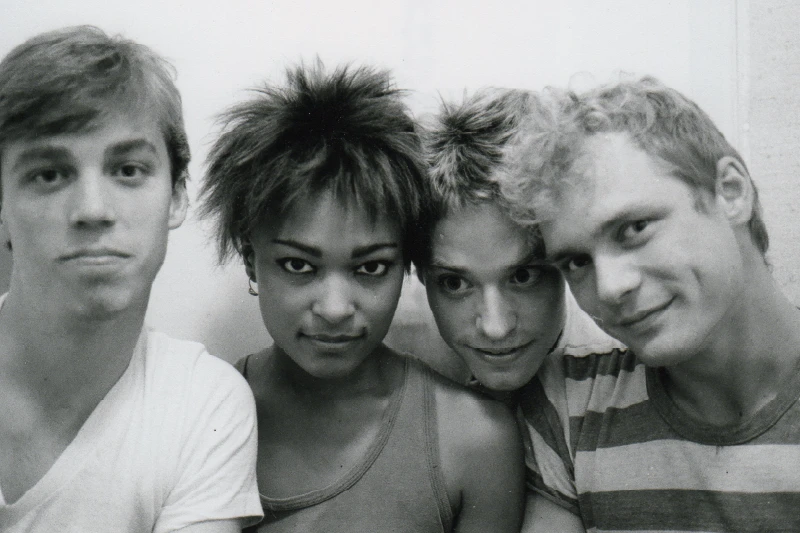
It is impossible for a single exhibition to even scratch the surface of a region as rich in musical expression as the Pacific Northwest, Puget Sound Stories was designed from the beginning to be a long term, living exhibition that will constantly evolve over time. Each year, MOPOP will rotate out some stories and explore new musicians, genres, scenes, and narratives across our region. The exhibition that you see today will not be the same when you return in the future.
Tell us what you want to see next.


