Open today from 10 AM – 5 PM


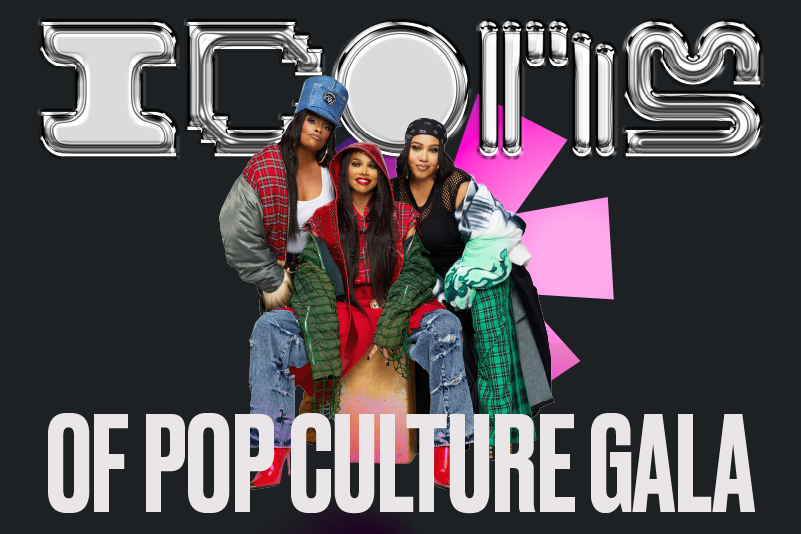
Salt-N-Pepa changed the trajectory of hip-hop. Their sharp lyricism, undeniable chemistry, and boundary-pushing style helped redefine who could take center stage. Now, they’re taking over Sky Church.
Get Your Tickets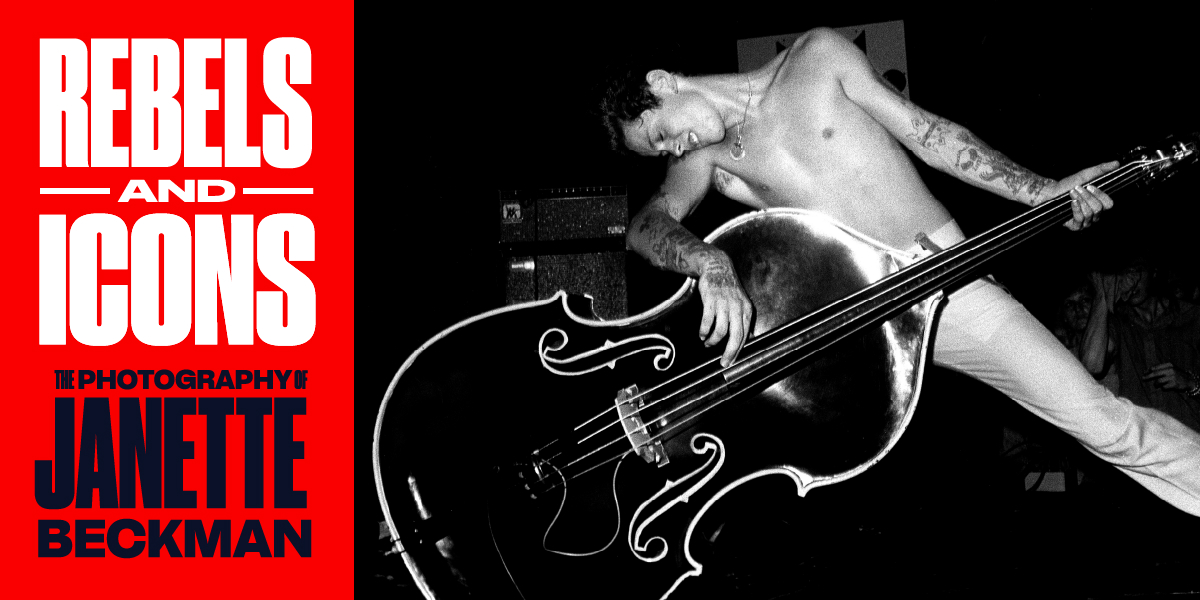
Let’s talk about the inspiration behind Rebels + Icons. Was there a single image or idea that unlocked the exhibition for you?
Honestly, it wasn't one image, it was a pattern that emerged over time. I spent a week with Janette in her SoHo studio, along with our Exhibition Project Manager and Senior Manager of Exhibition Design, and we went through thousands of photographs together. We'd print selects, pin them to the wall, stand back, move things around, and do it all over again. It's a slow, almost meditative process, but that's exactly when you start to see the shape of someone's career and the potential organization of the exhibition.
What kept jumping out at me was this: time and again, Janette was there just before things tipped. Before an artist broke through, before a subculture had a name, before anyone was calling it a movement. Her early Hip-Hop portraits of Run-DMC and LL Cool J, her images from the London Punk scene with bands like The Clash–these weren't made in retrospect. She was present and trusted. That idea of being at the edge of emergence of entire movements became the conceptual anchor for the whole exhibition.
Janette's work spans decades and completely different cultural worlds. How did you shape all of that into one cohesive story?
The temptation with an archive this rich is to go strictly chronological: here's the Punk era, here's Hip-Hop, here's what came next. But I kept resisting that, because it felt like it would work against what makes her photographs so powerful.
Instead, I organized the exhibition around ideas that cut across time: emergence, identity, performance, cultural authorship. That's what allows an early Punk portrait to sit next to a Hip-Hop artist from a completely different decade and city and have them speak to each other. The shared ethos is more interesting than the timeline.
We also leaned heavily into Janette telling her own stories in various ways throughout the exhibition. That along with archival materials like magazine spreads from publications like The Face, contact sheets, behind-the-scenes ephemera bridge Janette's personal history with her process. And we were deliberate about pacing. Some areas are dense and salon-style, almost overwhelming in the best way, echoing the energy of those downtown scenes. Others isolate a single image and present that image both monumentally and intimately with large wheat pasted walls with framed photos installed over them giving the images room to breathe. That rhythm matters.
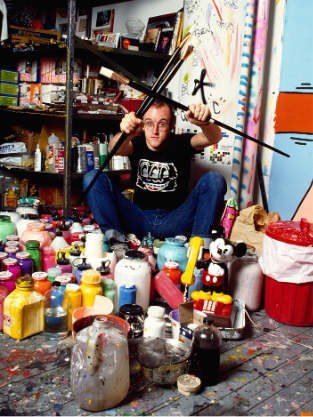
Can you talk about the meaning behind the title: Rebels + Icons?
The title captures something that's right at the heart of Janette's work. The "rebels" are the people operating outside the mainstream—young, experimental, defining themselves on their own terms. The "icons" are what some of those same people become once the culture catches up with them.
What's fascinating about Janette's archive is how often she photographs people before that shift happens. You look at a young Sade, or Salt-N-Pepa, or Pee-wee Herman, and they're fully themselves, grounded in their moment, but you can also feel something larger gathering around them.
The plus sign in the title is deliberate. It's not "Rebels versus Icons" or even "Rebels become Icons." It's a connection. A continuum. The exhibition asks visitors to sit with that, to think about how cultural value gets assigned, and what role photography plays in that process.
You spent real time with Janette before the exhibition took shape. How did that influence what you ultimately made?
It changed everything, honestly. That week in her studio wasn't just curatorial research, it was a crash course in how she works and who she is. Her photographs are grounded in genuine curiosity and long-term trust, and that's not something you fully understand until you're sitting across from her, watching how she talks about the people she's photographed.
It informed the selection process; we prioritized images where the subject is actively participating in how they're seen, not simply being documented. And it shaped our interpretive approach. Rather than over-explaining, we wanted to leave space for Janette's voice and for the subjects themselves to come through. That informed the design as well. The tone throughout the exhibition is direct and unpretentious; it's not trying to feel like a formal gallery. It's trying to feel closer to the city environments where these photographs were actually made.

Beckman's work often captures scenes before they go mainstream. Why is it important to preserve those early moments?
Because that's where you see culture most clearly. Before something gets formalized or commercialized, you can watch the experimentation happening in real time. You see communities building something together before anyone's told them what it is yet.
There's also a corrective function. A lot of the people shaping culture in any given moment don't get recognized for it until much later, if at all. Without documentation, those contributions disappear from the record. Janette's photographs of early Hip-Hop crews on New York streets, or Mod communities in London, function as primary sources. They don't just show who was there; they show how style and identity were being actively constructed.
At MOPOP, this connects to something we care deeply about: documenting culture as it's happening. These images reveal the conditions and communities that made certain movements possible, not just the movements themselves.
Let's get into the design of it all. How important was it to create a space that feels lived-in rather than purely gallery-driven?
It was non-negotiable. A clean, neutral gallery approach would have completely flattened the energy of Janette's work. We introduced layered materials—wheat-pasted walls, textured surfaces, studs, modular builds, towers, that echo urban environments without turning the space into a literal recreation of them.
There are subtle nods to London and New York throughout: in the graphic treatments, the color palette, the way spatial transitions suggest movement between scenes and cities. We also built a photo tour tied to some of Janette's favorite types of backdrops, so visitors can take their own portraits, which feels very true to her spirit – she still teaches street photography to others. There's a MOPOP-produced documentary nearby with interviews from people who appear in the photographs, and Janette personally curated the gallery's soundtrack.
The goal was to evoke presence, the feeling of being near these moments, while still letting the photographs lead.

There are subtle nods to photography embedded throughout the space. How did you think about translating photographic language into something physical?
We looked closely at the structures of photography itself—framing, cropping, sequencing, notation—and tried to translate those into spatial decisions. Large-scale prints function almost like environmental portraits, surrounding the visitor. Smaller groupings mimic contact sheets, suggesting process and variation. In some sections, images are staggered or layered in ways that reference editorial layouts from magazines like The Face.
None of it is overt. But together, these choices create something like an embodied understanding of how photographs get made, edited, printed, and eventually seen. The space itself becomes part of the argument.
Is there a section you find yourself returning to?
The Hip-Hop section, without question. Particularly the early portraits. There's something about images like those of LL Cool J or Run-DMC that I can't stop thinking about—they feel both completely casual and deeply intentional at the same time.
What you're seeing in those photographs is people constructing identity in real time. Through clothing, posture, location, expression—every element is doing work. These aren't passive subjects waiting to be photographed. They're authors of their own image, and Janette understood that completely.
We tried to honor that in the gallery with the interactive photo tour stations, which invite visitors to think about how they present themselves. That tension between the spontaneity of the moment and its long-term cultural weight—that's what Janette captures better than almost anyone, and it's what I keep coming back to.

Is there anything we didn't cover that feels essential to understanding this exhibition?
Access. That's the word I keep coming back to. Who gets to be inside these moments, and how that access is earned—that's the real story underneath the whole exhibition. Janette's photographs are as intimate as they are because of relationships built over years. That trust isn't incidental to the work. It is the work.
It also connects to how we think about collecting and displaying culture at MOPOP more broadly. This exhibition isn't purely retrospective. It's part of an ongoing effort to document movements as they're still evolving. The question we kept asking ourselves—which of today's rebels will become tomorrow's icons—isn't rhetorical. It's what gets us out of bed in the morning.
Want to see the exhibition for yourself? Rebels + Icons is now open—plan your visit today!


