Open today from 10 AM – 5 PM


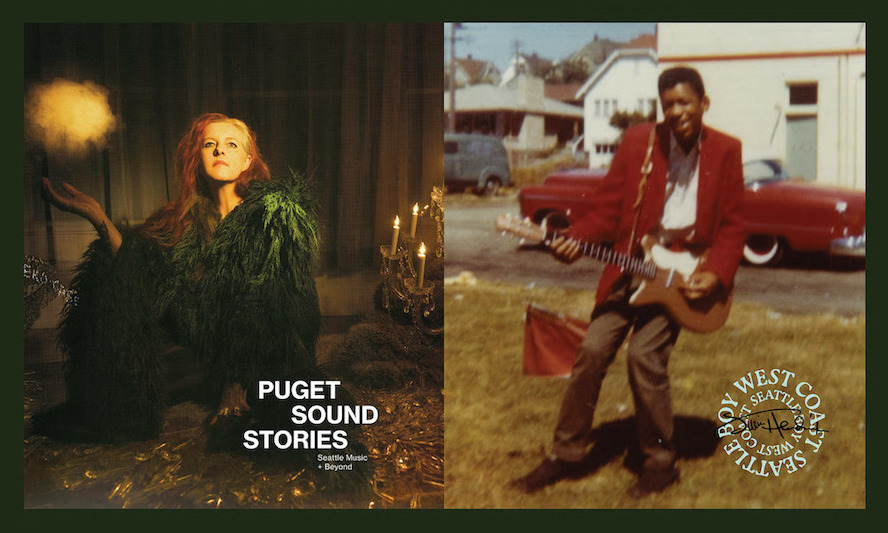
On November 21, MOPOP debuts Puget Sound Stories: Seattle Music + Beyond and Jimi Hendrix: West Coast Seattle Boy, celebrating the artists, places, and stories that gave the Pacific Northwest its voice.
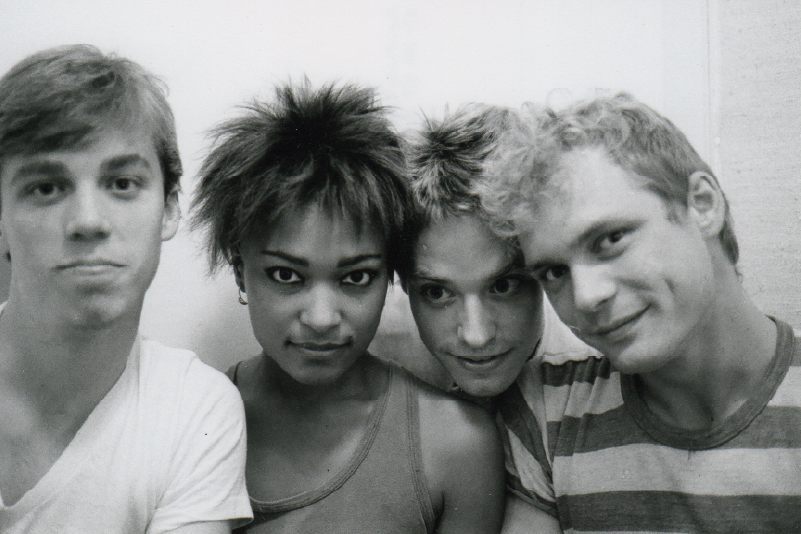
This is a pretty rare moment for MOPOP: debuting two major, long-term exhibitions on the same weekend. How would you describe the relationship between the two?
These two have always been thought of as companion exhibitions. At one point, I was trying to physically connect the galleries, boring a hole in between the gallery walls so that they could literally be connected. But, at the core, they're both Northwest stories. One is sort of writ large, and then one is specifically focused on Jimi Hendrix, but both center on Seattle as a character. Puget Sound Stories: Seattle Music + Beyond is definitely the epicenter, but it sort of reverberates outward. And then, with Jimi Hendrix: West Coast Seattle Boy, we play with that idea of Jimi growing up in Seattle and having many visual references to where he was going to school, playing, and living during that time.
Talk to me about the scope of Puget Sound Stories. How do you begin to tell a living narrative that features decades upon decades of artists and genres?
Back when MOPOP opened in 2000, we had an exhibition called Northwest Passage, which was a chronological, comprehensive look at music in Seattle and the region as a whole, from the 1930s onward. It had a section that focused on music that was happening right then, but when the show was still up 10 years later, the present had inevitably become the past.
Now, in contrast to Northwest Passage, we're not trying to be comprehensive. We're picking 25 different stories that feel like a good balance between genre and time period, well-known stories, and unknown stories that we still think are equally vital. Puget Sound Stories does a couple of things simultaneously: one, acknowledging that visitors coming to Seattle want to see the major artists they associate with the city; and two, responding to visitors who are asking to see more deep cuts from Seattle's history. We're trying to tell a more balanced story for everyone to enjoy.
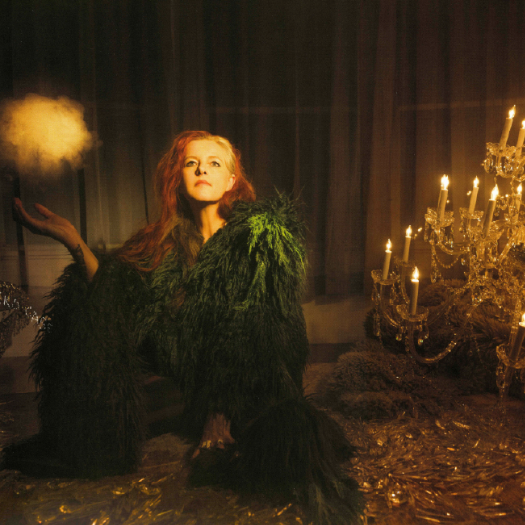
You've mentioned that Puget Sound Stories will continue to evolve throughout its time at MOPOP. What does that look like? How could the exhibition change over the course of five years?
Exhibitions are often frozen in time and static from the moment you open their doors. They, in some ways, deflate as time goes on because of different artifact loans and changes throughout. But here, we're taking a clue from our gaming exhibition, Indie Game Revolution, which kind of bakes in this process of updating a set of games each year. We're almost asking the visitors, "What do you want to see next?" So, there's this interactive call to action within the gallery.
The idea is to always have sections on those mainstream stories, such as grunge or Sir Mix-A-Lot or Heart. For other lesser-known stories, we’ll rotate in two to three new sections each year, to highlight these equally vital musicians and scenes that maybe never got the broad recognition as others. In five years, we could have 10 to 15 different stories added to the exhibition.
And then what I do like is that idea that those are just the physical objects. We also have our video monolith area, which we're launching with somewhere around 30 different short video experiences that are a mix of live footage and oral histories. We'll always continue to add to that, so it becomes a growing repository over time, which I think is exciting.
There was quite a bit of noise when MOPOP removed the Nirvana exhibition. Does Puget Sound Stories feel like an answer to some of those questions or concerns that came out of that conversation?
Well, I think most directly, for those folks who felt sad that the Nirvana exhibition went away, Nirvana is absolutely a presence in this exhibition. It's not nearly as in-depth as it was in the past, simply because we don't have the real estate to do that. Instead of telling one story in the same space, we're telling 25. But, what I do think it has the advantage of, is adding a lot of context to Nirvana’s story. You can see all of these other bands that were happening at the same time and were part of that bigger grunge story.
I also think it's an easy way for us to switch in and out new objects related to Nirvana. Before, we had an exhibition that was like an intricate puzzle, where everything was in its right place. It was really hard to be nimble with that. If something had to be pulled from the exhibition because the lender wanted it back, oftentimes there wasn't a replacement. While that structure allowed us to do a deep dive, it didn't allow for much malleability. This exhibition really does.
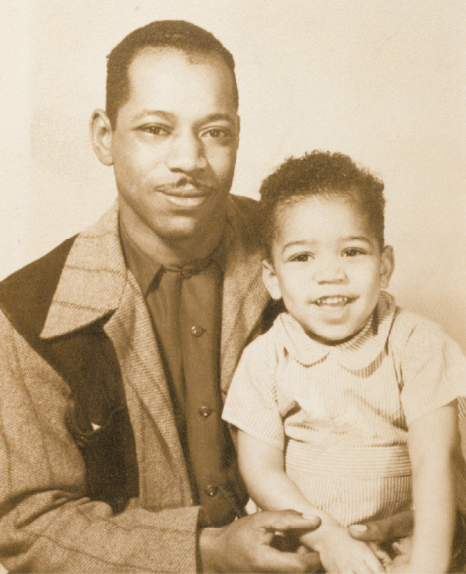
West Coast Seattle Boy takes a different approach from our previous Hendrix exhibitions, which have often centered on his global stardom. What inspired the decision to take a more intimate look at his life before fame, and what do you hope audiences discover about him through that perspective?
I think my approach to interpreting Hendrix over time, and this is about the eighth Hendrix exhibition we've done here at MOPOP, has been to lean into our collection, the world's largest, with about 6,000 Hendrix objects. The last show was really focused on Jimi as a superstar and what it means to carry yourself and your home around with you. The one before that focused on the first nine months Jimi spent in London, and the one before that explored the evolution of his sound.
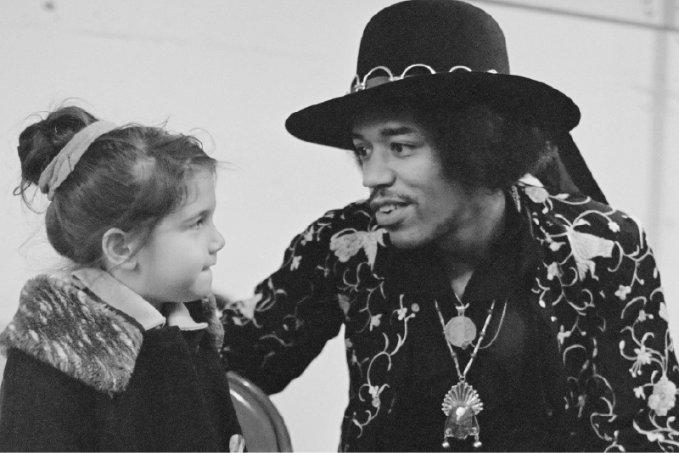
For this one, I think most people know Jimi as the superstar. So the idea was to really dig into his youth in Seattle, but not just his youth. We're going back to his grandparents coming to Seattle and his dad growing up in Vancouver and Seattle. It's a really intimate look at Jimi's family and his history in this town. You really get to see those emerging seeds of his creativity, whether in music or art. The last time we displayed any of this material, and not nearly to this extent, was back in 2003. So it's been a very long time. Being able to work with Janie Hendrix and pull from the Hendrix family archives has been really exciting.
The design of these two exhibitions is incredibly distinctive, with very different visual identities. Can you give us a sneak peek of the aesthetic direction behind each one?
For Puget Sound Stories, given the title, the idea of sound as a body of water, music, and environmental and geographic reverberations was a big key to the design. A lot of the colors evoke the water, landscape, forests, trees, mist, and fog. We have fake moss and pine foliage within the exhibition itself, along with elements reminiscent of the columnar basalt formations found in eastern Washington, really grounding the exhibition in the natural environment. We also have a central multimedia installation by Setting Sun Circle, an Indigenous artist group from Bellingham, emphasizing the ambient sounds of our natural environment and how those rhythms are carried on within local tribes.
For me, every exhibition is an opportunity to use as many senses as possible. Through the colors, design, and sound, we're trying to create an emotional environment. With the low lighting and multimedia installation, the gallery feels almost like a temple or a contemplative space.
And West Coast Seattle Boy?
Totally different design. We're really trying to evoke the feeling of the house or apartment Jimi might have lived in from the 1940s through the very early 1960s. There's a lot of period mid-century colors, wallpaper, wood wainscoting, and period lamp fixtures. The bulk of the exhibition is framed pieces, with an eclectic mix of framing styles. We're trying to be reminiscent of walking down the hallway in your family home and seeing all your family photos on the wall. It's almost a fantasy version of what that homey feeling might be. Because I think that's ultimately the vibe for the show: it's about family.
When you look at these stories together, what do they reveal about the interconnected nature of music and popular culture in the Pacific Northwest?
I think the excitement for me, and what feels distinctly Pacific Northwest about this, is that there's never just one story. There's a lot of pressure in pop culture to focus on what's happening right now, but the present is so much predicated on what happened in the past. There are so many ways to connect the dots between different moments in our cultural history, from the Whiz Kidz and their influence on Seattle's early music scene to what happened with punk rock and, later, Nirvana.
I'm actually giving a member talk in January where I'll take objects from the gallery that might seem seemingly disparate and show how they connect across time. I think the past is always informing what happens in the present and the future, and there are so many stories that you might not initially think you care about but are actually incredible and vital. If we can show that it's not just one story, but all of these cultural influences intertwining and moving in different directions, I think it illustrates just how interconnected culture really is.
Get tickets to opening day on November 21 and be among the first to experience Puget Sound Stories and West Coast Seattle Boy at MOPOP.